
Five-Hour Online Training on
“Data Privacy & Protection”
In today’s digital world, large amounts of personal and institutional information are stored and shared
through online systems. Schools and educational institutions rely on digital platforms for maintaining
student records, managing communications, storing administrative documents, and supporting teaching–learning
activities. While these systems improve efficiency and access, they also create risks such as data leaks,
unauthorized access, surveillance, and misuse of personal information. Ensuring data privacy and protection
has therefore become an essential responsibility for every individual and institution involved in education.
Cyber incidents such as data breaches, ransomware attacks, unsafe mobile applications, weak passwords, and
careless sharing of personal details have become increasingly common. These threats not only harm
individuals but can also disrupt institutional operations and reduce trust in digital platforms. To prevent
such risks, it is important for educators, school leaders, and administrators to understand basic concepts
of data privacy, learn safe data-handling practices, use secure authentication methods, and identify
attempts to steal or misuse information. Developing these skills forms a key part of digital literacy in the
modern learning environment.
While individual awareness is important, institutions play a central role in protecting data. Schools and
educational bodies must adopt strong privacy policies, ensure secure storage of information, use encryption
and backups, and control who has access to sensitive data. Regular audits, responsible use of digital tools,
and transparency in data practices help build a culture where privacy, safety, and accountability are
valued. Training students, teachers, and administrative staff in responsible digital behavior contributes
greatly to creating a safe and trustworthy digital ecosystem.
The online training on “Data Privacy & Protection” aims to strengthen the knowledge and skills of educators
and institutional stakeholders in these areas. The programme will offer conceptual understanding along with
practical demonstrations, showing how data is collected, stored, and transmitted, and how vulnerabilities
can be managed. Participants will learn how to protect personal and institutional data, prevent misuse of
digital platforms, and promote responsible data practices among learners and colleagues.
This initiative supports the vision of the National Education Policy, NEP 2020, which emphasizes the
importance of digital literacy, cyber safety, and responsible technology use in schools. NEP 2020 (Para
23.6) highlights the need to integrate cyber safety into teacher training and classroom practices so that
students can navigate digital spaces safely and responsibly. In alignment with this mandate, Central
Institute of Educational Technology (CIET)-NCERT, is organizing a five-hour online training programme, in
collaboration with the Information Security Education and Awareness (ISEA)-CDAC, Hyderabad.
The English version of the training will be conducted from 01 – 05 December, 2025, and the Hindi version
from 08 – 12 December, 2025, with live sessions each day from 4:00 pm to 5:00 pm. The sessions will be
broadcast on NCERT’s Official YouTube Channel and simulcast on PM eVidya DTH TV Channels (6–12) and the Jio
TV mobile application. All sessions will also be available as recordings through a dedicated playlist for
later reference.
The sessions will be broadcast live on NCERT’s Official YouTube Channel and simulcast on
PM eVidya DTH TV Channels (6-12) and the Jio TV mobile application.
Participants will also have access to recordings through a dedicated YouTube playlist,
enabling them to revisit content, consolidate understanding, and apply their learning in real-world
educational and financial contexts.
Objectives of Training:
After completion of the training series, the learner will be able to:
- Understand key concepts and challenges in data privacy and protection.
- Identify common data-related threats and learn preventive strategies.
- Promote responsible and privacy-conscious digital behavior in institutions.
- Review institutional data policies for secure and accountable data management.
- Apply practical measures to build a privacy-aware and secure educational environment.

Who can participate?
Students, Teachers, Parents, Administrators and all those who are interested.
Program Schedule:
| Date & Time | Title of the Sessions | Name of the Resource Persons | Banner Link | Presentation link | Video Link |
|---|---|---|---|---|---|
|
Day 1: Monday, 01 December 2025 |
Data Breaches and Cybersecurity | Mr. Harpreet Singh, Project Manager, CDAC, Mohali, Punjab- 160071 | Day 1 | Presentation-1 | Video |
|
Day 2: Tuesday, 02 December 2025 |
Consumer Rights and Data Protection | Dr. Kanti Singh Sangher, Scientist-E, CDAC, Noida, Uttar Pradesh- 201307 | Day 2 | Presentation-2 | Video |
|
Day 3: Wednesday, 03 December 2025 |
Privacy Risks in Emerging Technologies | Dr. Balaji Rajendran, Scientist-F, CDAC, Bangalore, Karnataka- 560100 | Day 3 | Presentation-3 | Video |
|
Day 4: Thursday, 04 December 2025 |
Data Privacy in the Workplace | Mr. K. Sai Krishna, Project Engineer, CDAC, Guwahati, Assam- 781039 | Day 4 | Presentation-4 | Video |
|
Day 5: Friday, 05 December 2025 |
The Ethics of Data Privacy | Mr. Shivansh Raghuwanshi, Knowledge Associate, CDAC, Patna, Bihar- 800001 | Day 5 | Presentation-5 | Video |
|
Organising Team: Programme Advisory:
Prof. Amarendra P Behera, Joint Director (i/c) and Head, PRD, Central Institute
of Educational Technology (CIET), NCERT, New Delhi.
Programme Coordinator and Course Coordinator : Dr. Angel Rathnabai, Associate Professor, Central Institute of Educational Technology (CIET), NCERT, New Delhi. Technical Coordinator: Mr. Somesh Kumar, Junior Project Fellow, Central Institute of Educational Technology (CIET), NCERT, New Delhi. |
|||||
How to participate?
Step 1 : Registration :
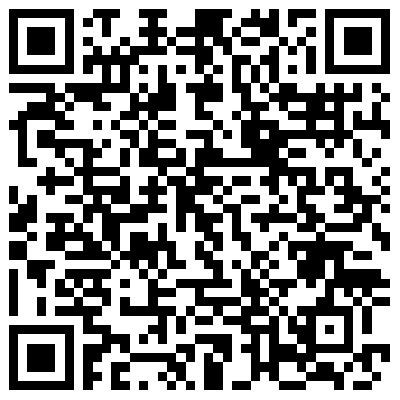
Participants need to register using the following link or the QR code -
https://docs.google.com/forms/d/e/1FAIpQLSeLAOuWUv0WjoxTyTZKNphCFziQs81kNn8VKrlX9hWbqAnIqA/viewform?usp=header
or scan the QR code -
Step 2 : Watch live sessions and learn about the topic:
Participants have to attend
training sessions, which will be live-streamed on NCERT Official
YouTube channel - http://youtube.com/ncertofficial from 01 - 05 December,
2025 in English version
(Monday to Friday, 4 PM to 5 PM)
The session will also be telecasted live on the following:
- PM eVIDYA Channels #6-12
- DD Free Dish Channel
- DISH TV Channel #2027-2033
- Jio TV mobile app
If anyone has missed the live sessions, they can watch the recording using the playlist link:
https://youtube.com/playlist?list=PLcsj1x9n9h4jadKFl6pshVgDhLq35vSI0&si=j3Oab9FFmgSvS0Wt
Step 3 : Take up the online course, participate in post-assessment, and get certified :
Those who are interested in getting a certificate, they need to do the following:
- Join the online course that will be launched on the DIKSHA portal.
The course link: https://learning.diksha.gov.in/diksha/course.php?id=956§ion=2070
This course will be open till 15 March 2026. - Participants need to join the course, go through all the five videos.
- Participants need to take up the final assessment. Participants can attempt thrice the assessment.
- Participants who score 70% and above in the final assessment will get a certificate and they can access their certificate in their DIKSHA profile page itself. It may take 15-20 days to receive the certificate.
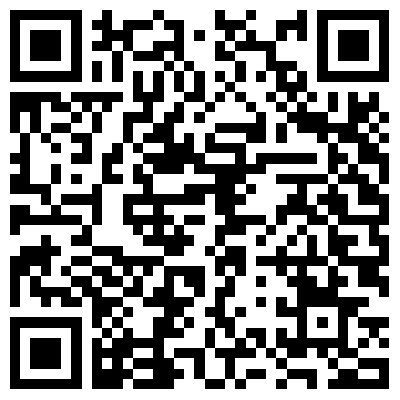
Step 4 : Submit Feedback : Participants are expected to submit feedback using the link or QR code
-
https://docs.google.com/forms/d/e/1FAIpQLScDDMrJuOlfk7DSX8pxKtSEvl0QTV1zK7JwHDlPMc-Anw2Ykg/viewform?usp=header
or scan the QR code-
This feedback form is intended to know participants' experiences, learning, and suggestions regarding the online training. This will help us in further improvement of the virtual training process.
For any queries, mail to : training.helpdesk@ciet.nic.in or call: 8800440559.